
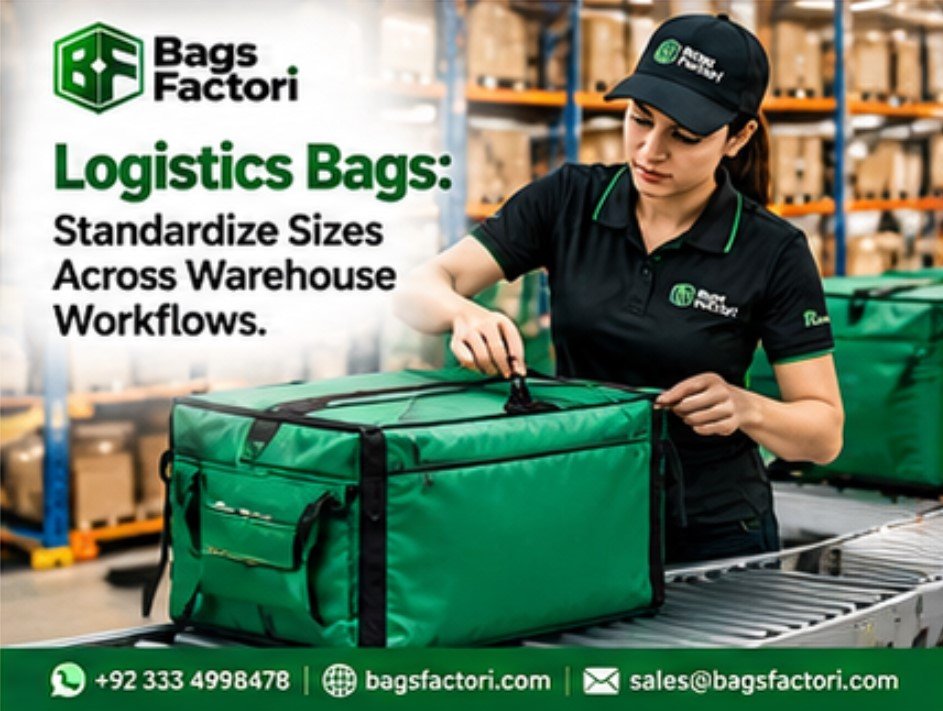
Standardize logistics bags by grouping the work they perform, then selecting a small set of usable sizes around those tasks. Parcel consolidation, indoor sorting and final delivery do not necessarily need the same carrier. Pakistan 3PL buyers should compare package fit, storage, access and handoffs before committing to a network-wide range. A controlled size system can simplify purchasing, but only when it reflects the actual workflow at each hub.
Start with Carrier Roles Across the Network
Record where bags are used and what each movement requires. Identify indoor grouping, hub transfer, return collection and final-mile access separately. Measure parcel arrangements and the spaces where loaded or empty carriers wait. A familiar product name may cover several quite different operational requirements.
Ask each site to describe recurring loads rather than its largest exceptional dispatch. Look for common patterns that justify shared sizes. Note genuine differences in parcel mix or loading equipment. Standardization should reduce avoidable variation without forcing unsuitable equipment into a distinct task.
The logistics bags with configurable size and construction options page lists shell, base, closure and identification choices. Confirm those details for each proposed model. A general logistics carrier description does not establish one agreed specification for every site.
Create Useful Size Classes
Define classes through usable internal measurements and permitted tasks, not vague small, medium and large names alone. Record opening clearance and any panels that change fit. Identify typical package arrangements for each class. Clear dimensions make quotations and receiving checks easier to compare across procurement teams.
Avoid Standardizing Features That Have Different Jobs
An indoor sorting carrier may benefit from folding and visible labels. A hub-transfer model may need different handles and support. A rider carrier requires another assessment of carrying and access. These roles can share branding while retaining appropriate construction differences.
Compare cargo delivery carriers for reusable hub transfers and PP woven sorting bags for route grouping. Separate final-mile choices in the courier and logistics product category. Avoid buying a complex reinforced model where a simpler approved format performs the task.
The material specification should name the construction required for each size class. Fabric denier or a waterproof-coating phrase cannot replace seam, closure and handle details. Confirm the intended gross load and evaluation basis. Useful internal space should not encourage staff to overfill the carrier.
Compare Material Choices Against Each Size Class
BagsFactori publishes polyester, nylon, coated fabric and structural options for logistics bags. Treat them as potential configurations rather than proof that every listed feature is included. Optional insulation belongs only where the contents and complete system require it. Ordinary parcel organization may benefit more from load support and label access.
| Component/material | Buyer benefit | Limitation | Sample or quality check | Specification to confirm |
|---|---|---|---|---|
| Oxford/polyester or nylon shell | Configurable weight and surface | Fabric name is not a bag strength rating | Inspect seams and rubbing points | Fabric construction and backing |
| Coated shell or tarpaulin | Addresses splash exposure | Openings can admit water | Inspect assembled closure | Coating, seams and exposure test |
| Reinforced webbing | Supports intended carrying layout | Anchoring affects stress distribution | Trial approved loaded sample | Webbing and attachment details |
| PP-board base or dividers | Supports load organization | Adds weight and reduces usable space | Check deflection and clearance | Placement and removability |
| Route/size markings | Identifies standard carrier class | Needs controlled coding scheme | Read during handoffs | Label placement and code |
Use materials and reinforcement information for reusable logistics carriers to develop the written component list. Trial closure alignment and handle position at the agreed load. Inspect the partly empty carrier as well, since its shape and access can change during the movement.
Record maintenance requirements by construction. A removable insert may improve flexibility but creates a component that can be misplaced. A rigid base may preserve shape but occupy more empty-storage space. Make those tradeoffs explicit rather than choosing one default for the whole network.
Match the Range to Storage and Handoff Space
Check shelf, trolley, dispatch bench and vehicle openings used at each site. A carrier can fit parcels while being awkward to place or retrieve. Trial the proposed sizes through normal handoffs. Do not treat a successful loading test at one location as proof for all hubs.
Consider how empties return and where they are held. Folding, nesting or insert removal changes the space required and staff work. Record who handles that process and which pieces remain with the carrier. The approved range should be practical on both outbound and empty movements.
The e-commerce and 3PL carrier planning page provides context for different network stages. Use site observations to select the range. Do not invent reuse savings before collecting operational evidence for retrieval, loss and maintenance.
Control Labels and Repeat-Order Versions
A size-class label should remain readable when carriers are loaded, stored or folded. Keep size identity separate from route or client information. Confirm print and label positions with staff at dispatch and receiving. Similar colors alone may not provide enough differentiation under normal handling.
Retain a reference sample and drawing for each model. Assign a specification version when dimensions, panels, material or closure changes. Procurement should know whether a revised unit remains compatible with the previous workflow. Exterior branding can stay similar even when useful internal fit changes substantially.
The custom bag manufacturing and approval process can support the discussion about controlled repeat supply. Agree which measurements and features incoming inspection will check. Request review of substitutions instead of accepting an unspecified equivalent build.
Compare Cost Across the Whole Range
No current numeric logistics-bag prices were available on the reviewed page. Request PKR offers by approved model and quantity. Include sizes, colors, artwork versions, panels and packed configuration. Ask whether mixed model quantities count toward minimums or are quoted separately.
| Option/specification | Quantity or unit | Price in Rs./PKR | Main cost driver | Source/date |
|---|---|---|---|---|
| Small carrier class | Per bag; state identical-build quantity | Request current quotation | Material and dimensions | Product page; 4 Oct 2026 |
| Larger hub carrier class | Per bag; state identical-build quantity | Request current quotation | Reinforcement and size | Product page; 4 Oct 2026 |
| Network labeled range | Per bag; state identical-build quantity | Request current quotation | Model count and artwork | Product page; 4 Oct 2026 |
| Sample, setup, packing and delivery | Itemized project quote | Request current quotation | Development and destination | Confirm in written offer |
Compare the total program cost with sample, setup, carton, tax and delivery charges identified. Include any additional receiving work caused by separate inserts. A standardized range should be justified by operational fit and records, not a blanket assumption that fewer models always reduce cost. Confirm MOQ and production dates for each build.
Frequently Asked Questions About Logistics Bag Standardization
1. Should every warehouse use one logistics bag size?
Only if the size fits its recurring package groups, handling and storage arrangements. Evaluate the actual workflows across sites. A small controlled range may serve different tasks better than one oversized carrier. Define usable measurements and permitted applications so standardization improves practical fit rather than hiding operational differences.
2. How should small, medium and large classes be defined?
Use internal dimensions, opening clearance, approved construction and typical loading arrangements. Names alone are ambiguous between suppliers and branches. Include panels and dividers that reduce usable space. Retain drawings and samples for each class so quotations, allocation and incoming inspection refer to the same physical specification.
3. Can sorting and hub-transfer bags share the same build?
They may where the tasks genuinely match, but compare handling, exposure, closure and return requirements first. Indoor sorting can prioritize flexible grouping, while transfer may need another support arrangement. Trial both workflows. Shared branding does not require identical reinforcement or an unnecessary feature set across every model.
4. Does denier establish a logistics carrier’s load rating?
No. Fabric construction, seams, handles, anchors, base and geometry also affect the assembled carrier. Specify the intended load and request the appropriate evaluation basis. Avoid treating a textile description or interior volume as capacity evidence. Verify the proposed sample against the approved task and handling method.
5. When should insulation be included in logistics bags?
Include it when the contents require a defined thermal packaging system. Ordinary dry parcels may not benefit from it. Temperature-sensitive applications need payload and route requirements, complete packout design and suitable evaluation. Foam or reflective lining alone does not establish a temperature range or shipment compliance.
6. Why check empty-storage space during selection?
Reusable carriers spend time empty between movements. Folding, nesting and removable inserts affect storage and retrieval work. Trial the actual return process and identify where pieces wait. A bag that suits outbound loads may create problems if it occupies excessive space or relies on components frequently misplaced after unloading.
7. How should size labels differ from route labels?
Size labels identify the carrier class; route labels identify its current assignment. Keep the distinction clear and readable during normal handling. Test placement when full, stored and folded. Colors can supplement the scheme, but controlled text or identifiers help staff avoid confusion when several models look similar.
8. What records support a repeat logistics bag order?
Retain the approved sample, dimensions, material identities, reinforcement, closure, panels, artwork and packing arrangement for each model. Use a specification version and review substitutions. Incoming checks should compare relevant features with that reference. An exterior photograph alone can miss changes that alter internal fit and operation.
9. How should a multi-model quotation be compared?
Compare approved models at stated quantities, then include samples, setup, artwork versions, packing, taxes and destination delivery. Ask whether quantities are combined for minimums. Different constructions should not be collapsed into one average bag price. Assess the program’s operational fit alongside its total purchasing and handling cost.
10. What should a network-wide logistics inquiry contain?
Provide recurring parcel arrangements, size classes, intended loads, site handling, storage and return needs. Include quantity by model, route identification, artwork and destinations. Request sample terms and an itemized PKR offer. Confirm production schedules and approval responsibilities so each hub receives the intended specification rather than an ambiguous range.
Request a Range Based on the Work at Each Hub
Use measured parcel groups and site trials to define a manageable carrier range. Send model requirements, quantities, branding, storage constraints and destinations through custom logistics bag range and quotation support. Approve samples and versioned specifications before standardizing purchases across the network.