
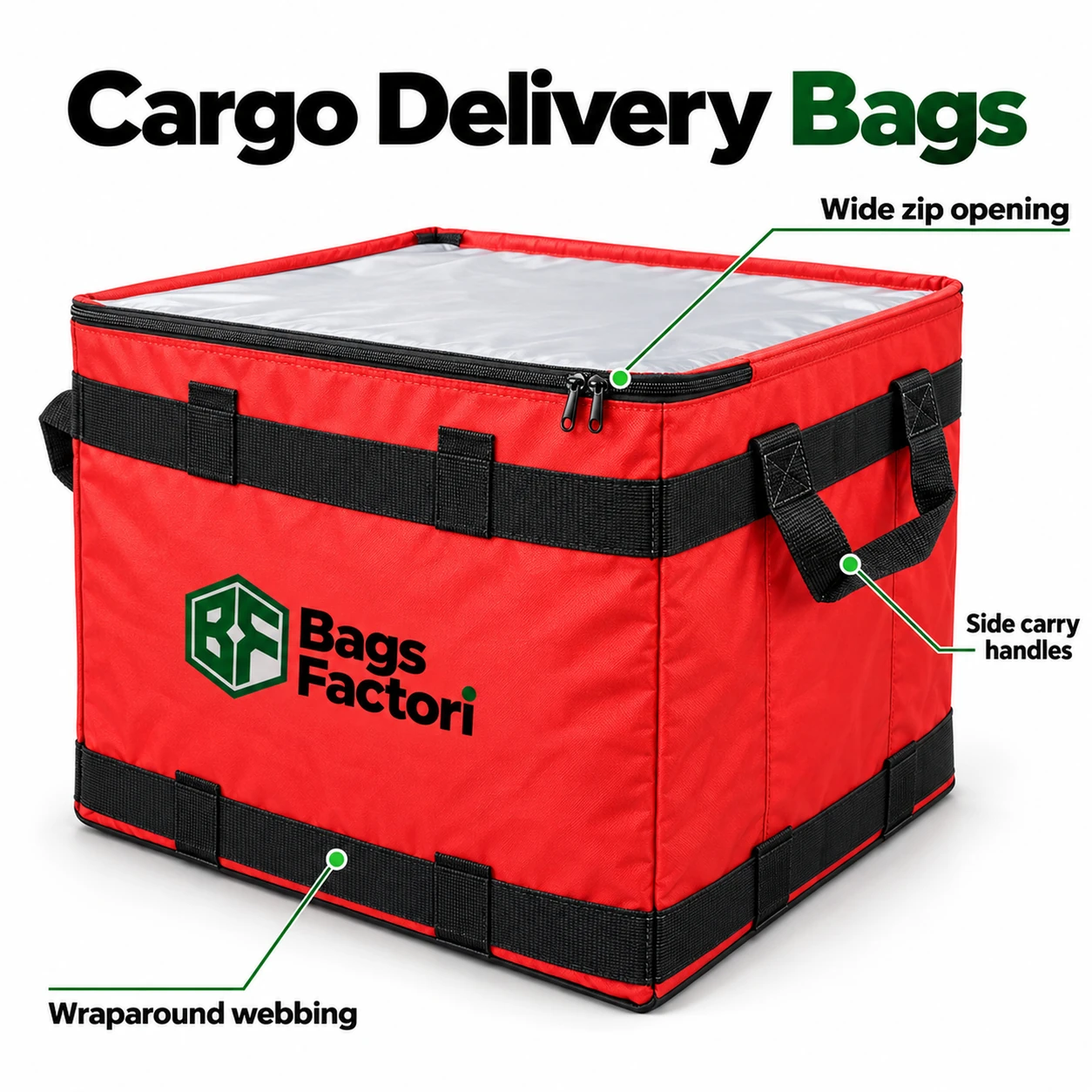
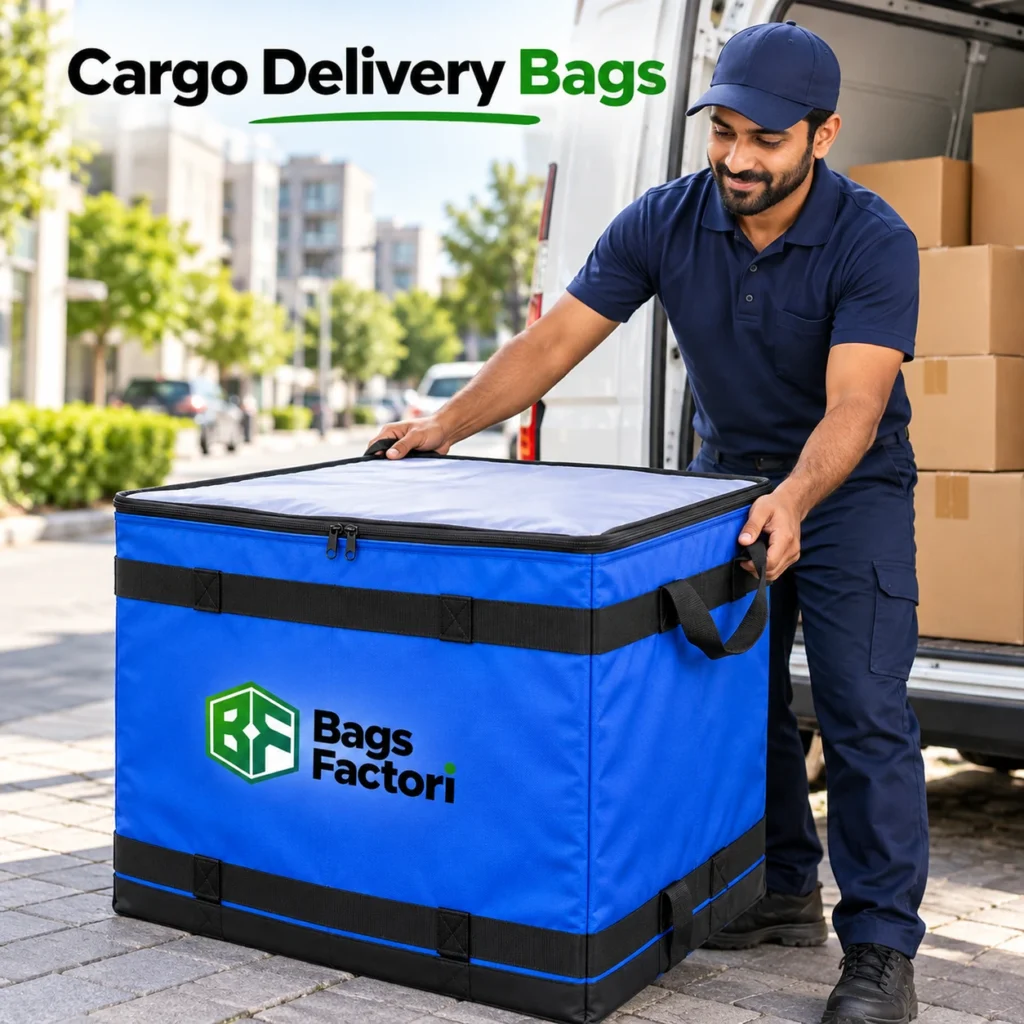
Choose cargo delivery bags around a defined parcel movement: what enters the carrier, who lifts it, how it travels and how the empty bag returns. Confirm usable dimensions, handle construction and closure access with a representative loaded sample. Then compare purchasing costs across the complete reuse loop. For Pakistan courier and 3PL buyers, a bag that performs well outbound can still be expensive if it occupies excessive return space or regularly disappears at receiving hubs.
Map the Transfer Before Selecting the Carrier
Describe the movement from packing station to dispatch, vehicle loading, receiving and empty return. Record where a full bag is carried, placed on a trolley or stored between handoffs. Include the point at which parcels leave it. This reveals whether the design needs broad access, a supported base or simple route identification.
Use the actual parcel mix rather than a single conveniently sized carton. Small packets, uneven boxes and returned packaging may fill a carrier differently. Measure the largest package and a typical combined load. Keep the stated load within your organization’s manual-handling arrangements and the bag’s agreed design limits.
BagsFactori’s cargo delivery bags for reusable freight movements page describes configurable shells, reinforcement, closures and identification. Those choices should be quoted for your route, rather than treated as a universal standard bag specification.
Separate Sorting from Transfer and Final Delivery
A light sorting carrier may suit short indoor movements of packaged goods. A transfer bag faces more loading, vehicle storage and retrieval. A final-delivery carrier needs access at individual stops and a carrying layout appropriate for the rider or driver. Document which task the purchase covers before asking for a sample.
The courier and logistics bag category for different handling stages provides a useful comparison of these formats. If your need is primarily grouping parcels by route inside a hub, compare PP woven sorting bags for warehouse parcel grouping before specifying a more elaborate cargo carrier.
Specify Dimensions and Load Support Together
Usable internal size determines package fit, while handles and seams determine how the carrier supports the agreed load. Neither can be inferred from outside dimensions or fabric appearance. Include loading clearance and closure access in the specification. A bag can contain a parcel but still be difficult to close or lift in normal use.
Request a defined maximum gross load that includes both contents and carrier where appropriate, and ask how the design will be evaluated. Examine handle anchoring, base support and corner reinforcement on the sample. A strong-looking shell with short, poorly positioned attachments may concentrate stress in the wrong place.
Choose Construction According to Handling and Exposure
The published cargo page lists PP woven material, Oxford fabric and PVC tarpaulin among possible shells. It also describes optional structural inserts, partitions and insulated variants. Confirm which options apply to the quoted model. Standard packaged-parcel movements may benefit more from handles and identification than thermal layers.
| Component/material | Buyer benefit | Limitation | Sample or quality check | Specification to confirm |
|---|---|---|---|---|
| PP woven shell | Flexible parcel consolidation and compact empty storage | Weave, seams and handles determine suitability | Inspect loaded seams and folding | Fabric weight, weave and reinforcement |
| Oxford polyester or nylon | Configurable shell for repeated handling | Denier alone does not establish bag strength | Check abrasion points and stitching | Fabric construction and backing |
| Coated material or PVC tarpaulin | Supports splash-resistant exterior design | Closure and seam leakage remain possible | Evaluate complete-bag exposure | Coating and seam details |
| Reinforced webbing handles | Supports the intended carrying arrangement | Attachment location affects loading stress | Observe sample lifting at agreed load | Webbing, anchoring and handle length |
| PP-board base or partitions | Helps organize and support parcels | Adds weight and reduces folding flexibility | Check deflection and removal | Insert construction and layout |
| Zipper, flap or drawcord | Allows access matched to the transfer routine | Different closures provide different containment | Trial opening, loading and closing | Closure and any tamper-evidence requirement |
Review materials and reinforcement options for delivery carriers while building the specification. Water-resistant material is useful information, but whole-bag waterproof performance requires suitable construction and verification. Do not infer it from a coated panel.
Make Identification Useful at Each Handoff
A route panel should be visible where receiving staff naturally approach the bag. Permanent company branding can identify ownership, while a replaceable document window may suit changing destinations. Define whether the marking represents a branch, route, customer group or asset number. Mixing these roles on one crowded panel makes recognition harder.
The e-commerce and 3PL delivery bag planning page discusses different carrier roles across fulfillment and last-mile operations. Use that distinction to keep a hub-transfer bag’s identification and access requirements separate from a rider’s stop-by-stop workflow.
Include Empty Returns in the Price Comparison
A reusable bag creates repeated value only if it returns in usable condition. Decide who collects empties, where they wait and how many transfer cycles occur before retrieval. Foldable shells may occupy less return space, while structural inserts can require removal or nesting. Both approaches need a practical storage arrangement.
No current numeric cargo-bag prices were displayed on the reviewed pages. Request PKR unit and project quotations against an identical approved specification. Ask whether printing, labels, structural panels, cartons, taxes and delivery are included. MOQ and sample timing should be confirmed for the particular order.
| Option/specification | Quantity or unit | Current price in Rs./PKR | Main cost driver | Source/date |
|---|---|---|---|---|
| Flexible PP woven carrier | Per bag; stated order quantity | Request current quotation | Fabric, dimensions and handles | Cargo product page; 4 Oct 2026 |
| Reinforced Oxford carrier | Per bag; identical approved build | Request current quotation | Shell, seams, base and closure | Same source/date |
| Coated or tarpaulin version | Per bag; same internal dimensions | Request current quotation | Material and weather-oriented construction | Same source/date |
| Identification and partitions | Itemized per bag or setup | Request current quotation | Label windows, artwork and inserts | Same source/date |
| Sample, cartons and delivery | Project quote to named destination | Request current quotation | Development, packing and freight | Confirm in written supplier offer |
A useful internal measure is total carrier-program cost divided by completed useful movements. Include purchases, repairs, cleaning, return handling and losses in the numerator. Use your pilot records for expected movements rather than a supplier’s unsupported lifespan estimate. Compare alternatives over the same route and reporting period.
Run a Pilot and Preserve the Approved Build
Have dispatch and receiving teams trial the sample with representative packaged goods. Record loading access, lifting comfort, closure operation, visible damage and retrieval of empties. Note where handles snag or inserts slow unpacking. Use these observations to refine the design before expanding the purchase.
The custom bag manufacturing and sample approval process explains BagsFactori’s published development stages. Agree your own acceptance criteria, retain a reference sample and document materials, measurements, artwork and packing. Changes to the approved build should be recorded before repeat production. For customer doorstep operations, assess courier delivery bags for frequent final-mile handoffs separately.
Cargo Delivery Bags: Frequently Asked Questions
1. How is a cargo delivery bag different from a sorting bag?
The operational difference is the handling task. A sorting bag groups packaged items within a workflow, while a cargo carrier may support repeated hub transfers and vehicle loading. Similar materials can appear in both. Specify access, load support, exposure and return handling instead of choosing by name alone.
2. Should we order one cargo bag size for every hub?
Only if it fits the parcel mix, loading space and handling process at each location. Test common and larger package arrangements across the relevant routes. A small set of standardized sizes can be more practical than one large bag that invites overfilling or wastes return space.
3. Can fabric denier tell us the bag’s load capacity?
No. Denier describes a yarn characteristic and does not rate the complete carrier. Load performance also depends on fabric construction, seams, handles, anchors, base and closure. Ask for an agreed load specification and relevant evaluation evidence, then inspect the assembled prototype with representative packaged goods.
4. When should we consider PP woven rather than Oxford fabric?
Consider PP woven for a flexible consolidation format where folding and empty storage matter. Oxford constructions may suit different handling and surface requirements. Evaluate actual samples at the intended load and route conditions. Neither material name establishes universal suitability, and reinforcing details can change both performance and price.
5. Does coated fabric make a cargo carrier waterproof?
No. Water can enter through stitching, seams, zippers or an uncovered opening even when the shell resists splashes. State your exposure conditions and request construction and testing appropriate to the claim. Avoid treating ordinary water resistance as assurance that parcels remain dry under every transport condition.
6. Which closure is useful for a busy receiving hub?
Choose through a loading trial. Drawcords, flaps and zippers differ in access, containment and operation with a full bag. Check snagging, closure alignment and parcel removal. If tamper evidence is required, specify it separately and confirm the complete solution rather than assuming a zipper provides it.
7. How should route labels and asset numbers be used?
Keep destination information distinct from the permanent carrier identifier. Put markings where dispatch and receiving staff can read them during normal handling. Test any label window or barcode with your records and scanning process. Printed identification supports traceability only when operational systems capture the relevant handoffs.
8. What should a loaded cargo-bag pilot record?
Record the parcel arrangement, agreed load, loading and unloading difficulties, closure performance, handle comfort and visible damage. Follow the empty carrier through storage and return. Capture repair, cleaning and loss events as well. These observations support a better specification and a more credible cost-per-movement comparison.
9. Should standard parcel cargo bags include insulation?
Specify insulation only when the contents require an appropriate thermal system. Ordinary packaged parcels may not benefit from it. Temperature-sensitive variants need defined payloads, packaging, route conditions and validation. Adding foam or reflective lining alone does not establish a temperature range, holding duration or regulated-shipment compliance.
10. What details help suppliers quote reusable cargo bags accurately?
Provide internal dimensions, package mix, maximum agreed load, carrying method, closure, exposure and expected quantity. Include route-label requirements, artwork, empty-return arrangement and destination. Request separate sample, setup, packing and delivery charges. Confirm MOQ, production dates and the approved build in the written commercial offer.
Related Products and Reading
- PP woven carriers for route-based warehouse sorting
- Courier carriers for final-mile parcel delivery
- Bag production stages and sample inspection planning
Build a Carrier Program That Completes the Return Loop
A workable cargo bag specification connects parcel fit, handling, identification and retrieval. Start with a route-specific sample, then use pilot records to compare total costs and refine the build. Share your package dimensions, load, quantity, branding, destination and return plan through custom cargo carrier design and quotation support, or email sales@bagsfactori.com for guidance and sample terms.