
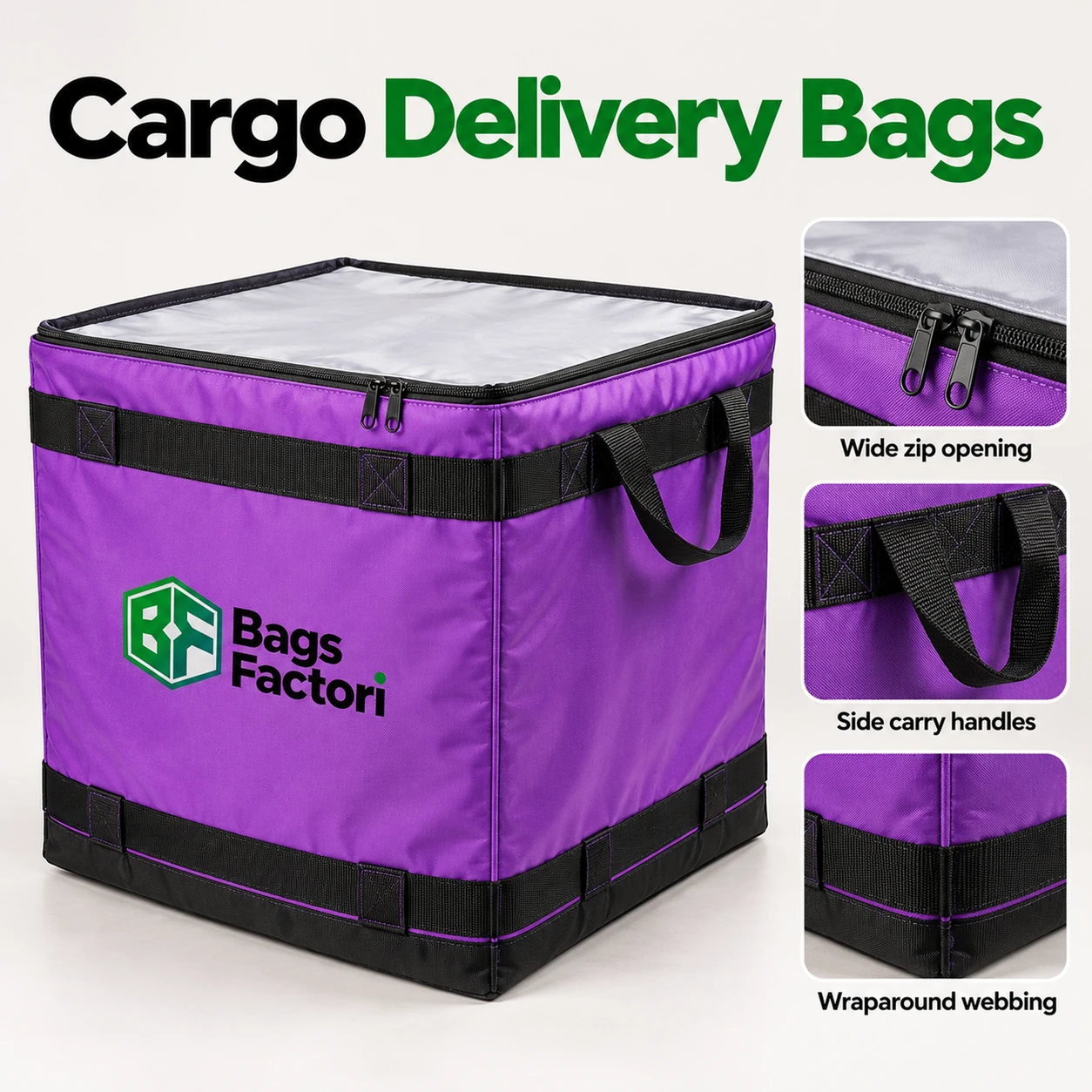
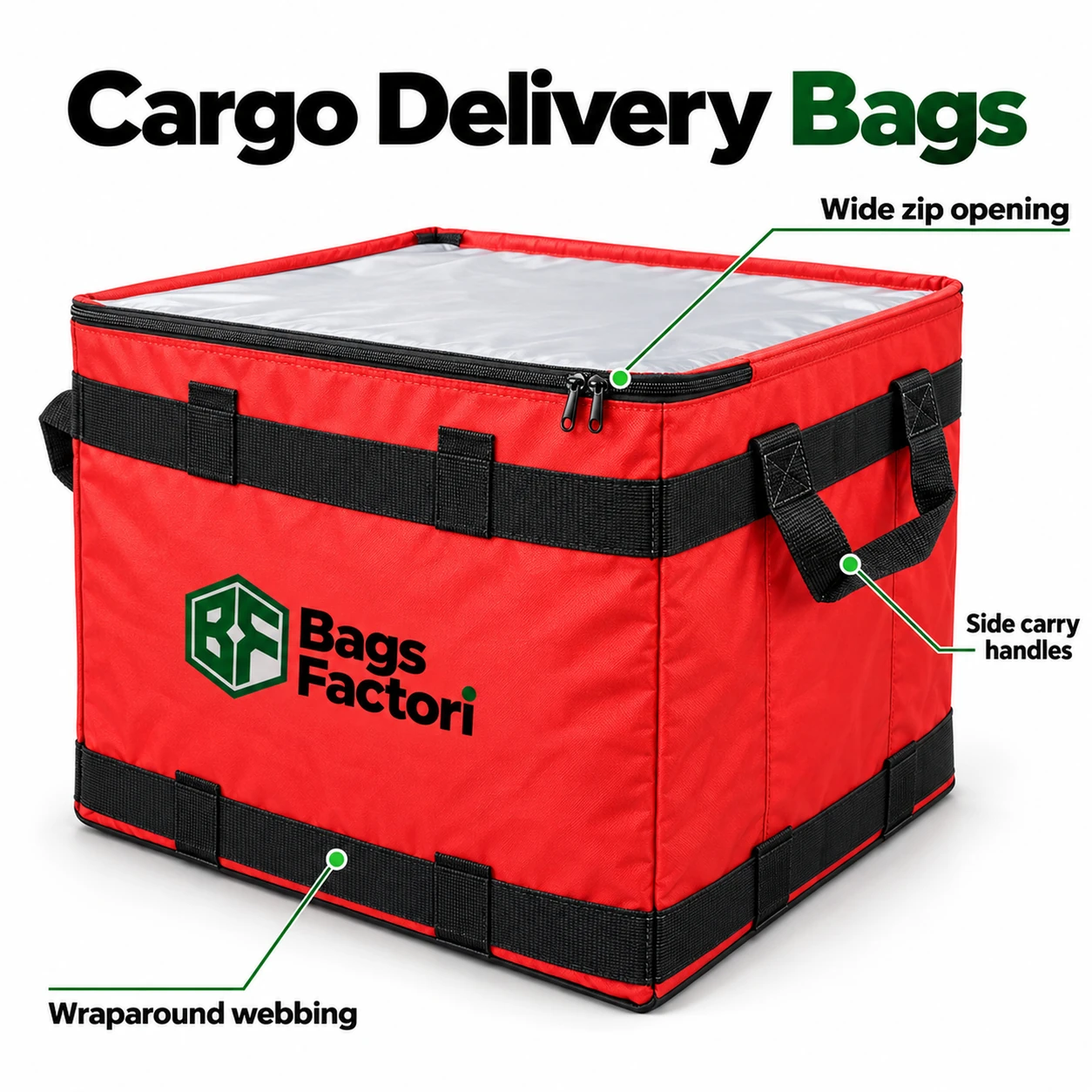
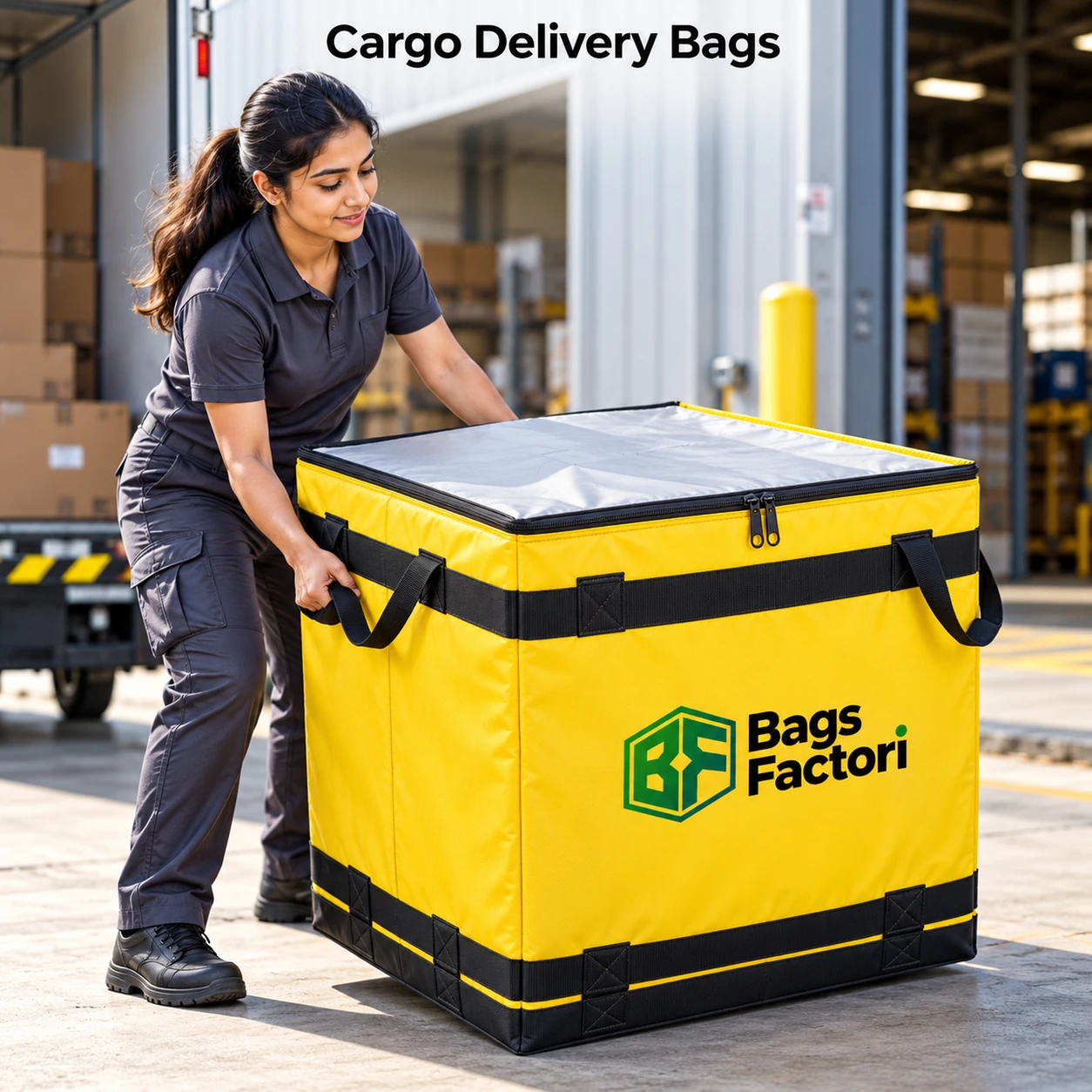
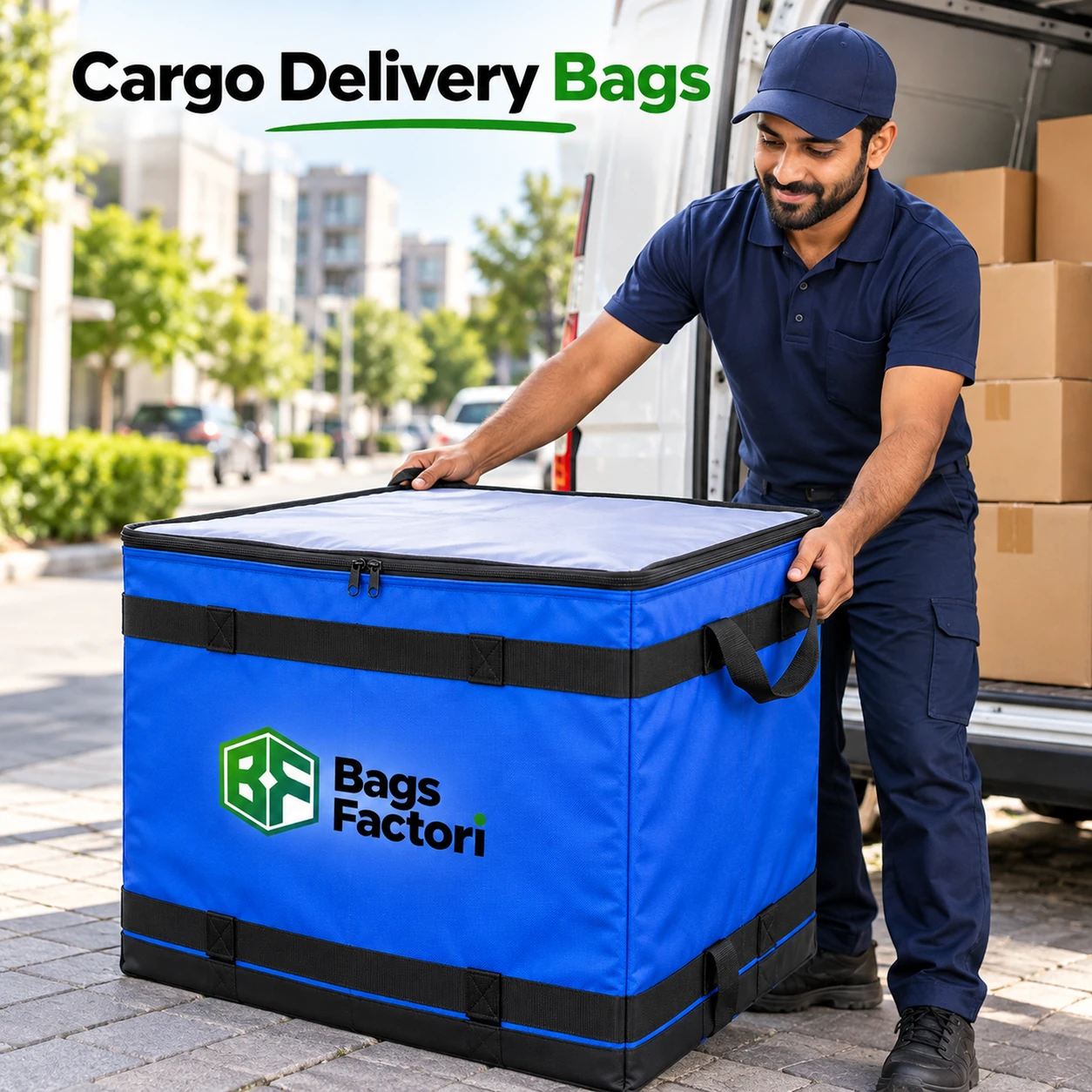
Description
Cargo & Logistics Delivery Bags Specifications and Materials
Choose the shell according to handling intensity and the goods inside. PP woven polypropylene offers a lightweight option for routine sorting; 600D Oxford nylon or polyester with PVC backing can support repeated parcel movement. Heavier Oxford and PVC tarpaulin are options where abrasion, dirt, and wet loading are greater concerns. Specify handles and base against maximum loaded weight. Test samples with actual goods and the intended lifting method; seam performance also depends on stitch pattern and where handle webbing is anchored.
Zippers, flaps and drawcords offer different access patterns. Heavy-duty YKK zippers are a buyer-specified option that should appear on the approved bill of materials. Coatings resist splashes; test seams and closures before claiming waterproof performance.
High-density EPE foam with a reflective thermal aluminum foil lining can be added for temperature-sensitive variants. Standard logistics industry delivery bags prioritize strength and identification. Specify and test any temperature-sensitive packout. Review the materials and quality guide when comparing builds.
Product Specifications & Technical Details
| Feature / Specification | Technical Standard | B2B Advantage |
| Shell | PP woven, 600D Oxford or PVC tarpaulin by RFQ | Matches handling intensity |
| Load support | Reinforced base, seams and webbing | Better control during lifting |
| Closure | Zipper, covered flap or drawcord; YKK on request | Access suited to the workflow |
| Identification | Route panel, document window or printed number | Faster depot sorting |
| Structure | Optional PP board and reinforced corners | Shape retention for parcels |
| Insulated version | EPE foam and aluminum foil lining | Optional thermal protection |
| Interior | Removable partitions and wipe-clean liner | Flexible packed-goods separation |
 Wholesale Cargo Bag Pricing, MOQ & OEM/ODM Customization
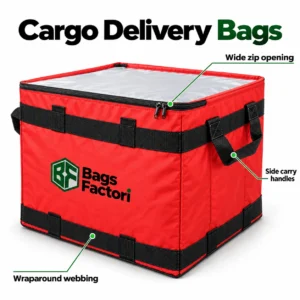
The cost of a reusable cargo delivery bag depends on fabric weight, size, handle construction, closure, print setup, structural inserts and carton packing. Returnable warehouse programs may justify stronger builds. Compare cost per movement, including returns and losses.
B2B Wholesale & Quantity Pricing Structure
| Bulk tier | MOQ / pricing basis | Sample availability | Estimated production lead time |
| 50–200 units | Pilot MOQ subject to design approval | Prototype on request; samples usually 7–14 days | Confirm after sample sign-off |
| 201–500 units | Volume quote against one approved build | Pre-production sample available | Confirm after sourcing materials |
| 500+ units | Contract quote for network replenishment | Approved reference sample retained | Phased dates in purchase order |
These tiers are quotation scenarios, not guaranteed MOQs, fixed prices or promised bulk dates. Request destination-specific landed quotes. Custom logo printing can use silk screen, rubber patches or embroidery, depending on shell and cleaning needs. Custom color matching identifies sites; reflective safety strips aid visibility. Specify custom sizing, serial identifiers and route-label placement on the approved drawing.
Provide the dimensions of typical packages, expected maximum gross bag weight, handling method, projected volume and destination country. State whether bags are carried, stacked or returned flat. Bags Factori can quote production and export packing through OEM/ODM manufacturing and the bulk quote form.
Cargo Bag Types & Practical Fleet Design Features Warehouse Sorting and Hub Transfer Bags
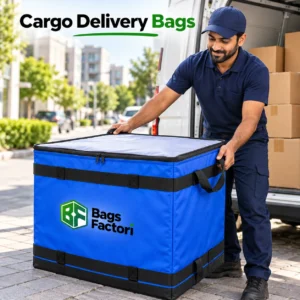
Lightweight cargo logistics bags can group small parcels by destination, retailer or service level. Printed route numbers support sorting. Browse PP woven logistics sorting bags for a simpler warehouse-focused format.
Reinforced Cargo and Courier Models
Dense or irregular packaged goods need webbing extended around stress points and a base tested at realistic load. Short-distance cargo transport bags may use wide openings for vehicle loading, while a smaller courier delivery bag serves final-mile riders.
Rider Straps, Mounting Hooks & Thermal Options
For bike routes, padded ergonomic shoulder straps and appropriately sized motorcycle mounting hooks can be designed around the actual rack and load. Temperature-sensitive variants need separately tested insulation and coolant.
Partitions and Return Handling
Internal partition dividers can separate customers, stops or fragile packed items. Foldable carriers save return space; rigid inserts add structure. Select the layout based on both outbound and return movements.
Enterprise Benefits of Custom Cargo Delivery Bags
Fleet managers purchasing bulk cargo delivery bags should assess reuse cycles, load safety and sorting speed along with price. Six measurable procurement benefits include:
- Improved cost visibility: Compare the bag’s landed price with expected service cycles, repairs, losses and the cost of bringing empty carriers back.
- More efficient sorting: Route numbers, branded panels and color matching help employees recognize destination groups at busy hubs.
- Consistent brand presence: Custom logos distinguish your equipment when several 3PLs or suppliers share a loading area.
- Better packaged-goods support: Reinforced bases and configurable dividers reduce shifting when goods are packed appropriately.
- Weather-resilient choices: Coated fabric and protected openings can reduce rain exposure on suitable routes and tested designs.
- Simpler replacement planning: Approved samples, measurements and specifications make repeat purchasing less dependent on guesswork.
Before deployment, fill the sample with representative goods and observe lifting, stacking, closure operation and return storage. Compare wear after repeated cycles, not just after one demonstration.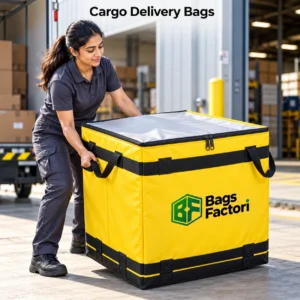
Pros & Cons: OEM Cargo Bags Versus Generic Stock Carriers
Advantages: Bags Factori can match the bag size to pallet bays, vehicle openings or recurring parcel groups while locating handles where staff actually lift. Route windows and reference samples support inspection. Generic sizes may waste capacity or hinder handling. In a pilot, compare loading speed, bag damage and the number of safe reuse cycles against your current carriers.
Trade-offs: Custom development involves drawings, sample approvals and a production schedule. Thicker fabric, structural panels and premium hardware can increase unit price and packed freight volume. Large bags may invite overloading even when fabric feels strong. Budget for returns, cleaning and losses. A durable bag left at its destination cannot deliver the reuse savings forecast in a closed-loop program. Test realistic loads; mechanical hoisting requires engineered approval.
Global Markets & Regional Cargo Bag Requirements
Dubai and Saudi Arabia fleets may need dust-resistant exteriors and attention to hot loading conditions; high thermal insulation should be specified only for temperature-sensitive cargo and tested with its complete packout. UK routes and distribution across Germany, France, Italy, the Netherlands and Spain may prioritize coated shells and protected closures. USA and Australian buyers can standardize carton labels, measurements and replenishment schedules across multiple distribution centers. Test South African and Mexican routes locally.
Import labeling, restricted-goods packaging and freight documentation depend on the destination and contents. A reusable cargo bag is not automatically a certified dangerous-goods package or a substitute for regulated primary packaging. Agree required evidence, pallet configuration, Incoterms and customs responsibilities in the contract. Bags Factori’s export and shipping guidance can support RFQ preparation.
Cargo & Logistics Bags: B2B Frequently Asked Questions
1. What is the MOQ for custom cargo bag orders?
MOQ varies by material, dimensions and branding. The 50–200-unit pilot tier is a quotation scenario, not a standing minimum. Request a written project offer.
2. Can we add OEM/ODM branding and logo placement?
Yes. Send vector artwork, color references and preferred print, patch or embroidery positions. Approve branding on a sample before bulk production.
3. Which materials provide insulation and waterproofing?
Optional EPE foam and foil lining slow temperature change; coated Oxford or tarpaulin resists splashes. Request seam and closure testing before claiming waterproof performance.
4. Can we request a pre-production sample?
Yes, subject to quotation. Load it with representative goods and verify handles, seams, access, labeling and storage before signing off.
5. What are timelines for the USA, UK, UAE and Europe?
Production depends on specification and approval; shipping depends on freight mode and customs. Ask for a dated factory schedule and destination-specific quote.
6. How do bags cope with extreme weather?
Specify coated fabric for exposure to rain and dirt. For heat-sensitive cargo, test the complete insulated packout; fabric alone cannot guarantee temperatures.
7. Are cargo bags washable and easy to sanitize?
Wipe-clean liners are available. Agree compatible cleaners for each material, dry fully after use and replace units with damaged seams or lining.
8. What payment terms and trade assurances apply?
Confirm deposit, balance, inspections and any third-party assurance in your signed order documents. Request a pro forma invoice before payment.
9. How are bags packed for export freight?
Set folding method, carton counts, labels and pallet pattern in the purchase order. Confirm gross weight and packed dimensions for freight pricing.
10. Can sizes and internal dividers be customized?
Yes. Provide package dimensions, maximum loaded weight and route-grouping needs. Evaluate partitions, handles and access on a physical prototype.

Reviews
There are no reviews yet.