
Description
Medical Courier Bag Materials, Insulation & Quality
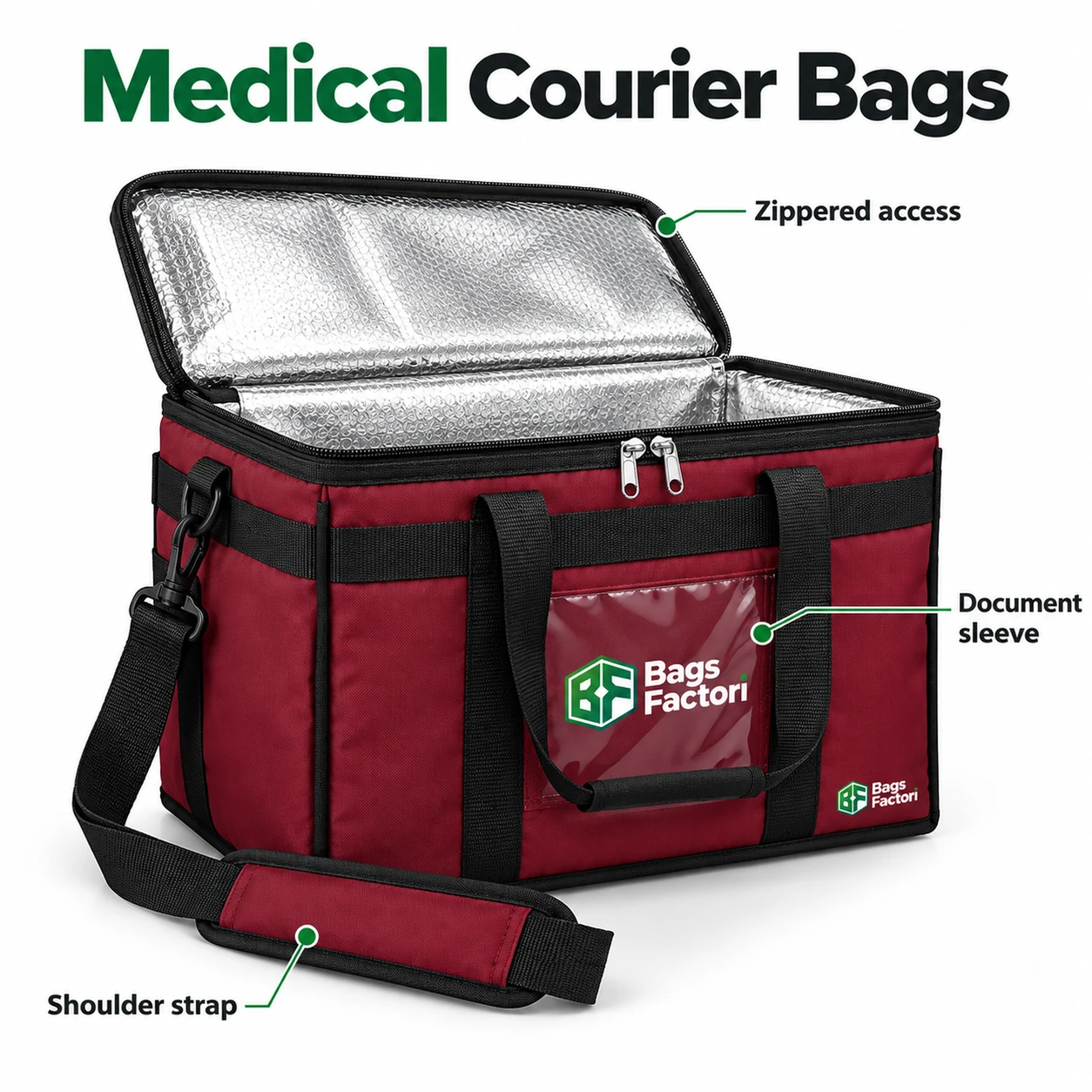
A standard commercial specification may use 600D Oxford nylon or polyester with PVC backing; heavier Oxford or PVC tarpaulin can be requested for repeated outdoor handling. Wipe-clean interior surfaces and accessible corners support routine inspection. Reinforced handles and a supported base help with repeated transfers.
For insulated configurations, high-density closed-cell EPE foam reduces heat transfer and reflective thermal aluminum foil lining forms part of the thermal assembly. Approve liner, foam and coolant-pocket positions. Insulation alone cannot guarantee a stated range or duration, including for products requiring controlled refrigerated transport.
A covered closure helps limit air exchange and splash exposure. Specify heavy-duty YKK zippers by name if that component is required; otherwise confirm the zipper quoted. Coated fabric alone does not waterproof seams. Request a finished-bag water-ingress test if a waterproof claim is commercially necessary. Consult the materials and quality guide for component comparisons.
Product Specifications & Technical Details
| Feature / Specification | Technical Standard | B2B Advantage |
| Exterior | 600D Oxford/PVC backing; tarpaulin option | Reusable, splash-resistant shell |
| Thermal core | Closed-cell EPE foam; thickness by project | Slower temperature change |
| Lining | Reflective foil plus wipe-clean inner surface | Easier routine inspection |
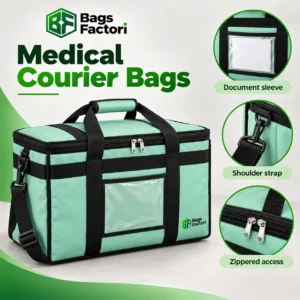
| Closure | Insulated flap and heavy zipper; YKK on request | Consistent access during routes |
| Internal layout | Removable dividers and coolant pockets | Repeatable packing arrangement |
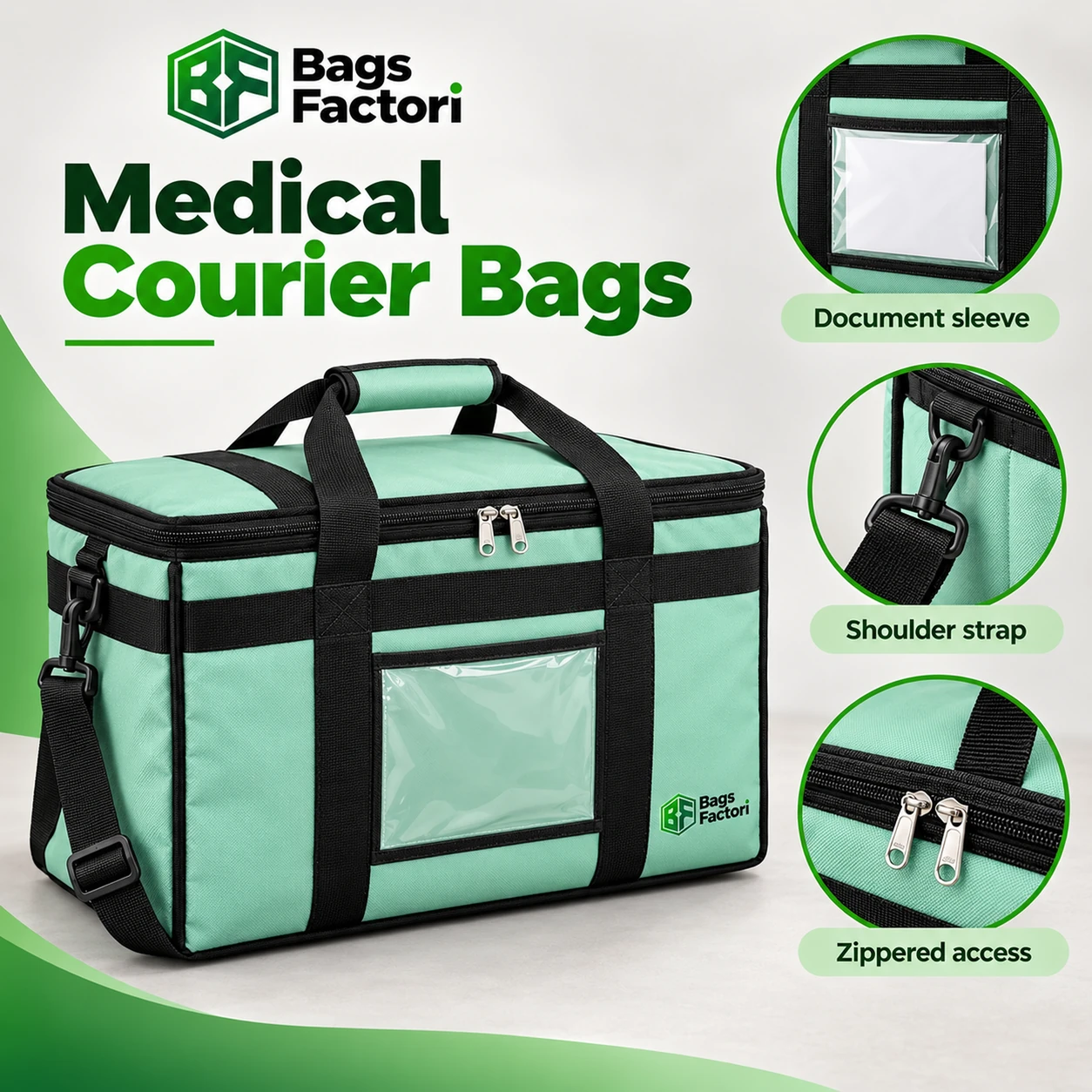
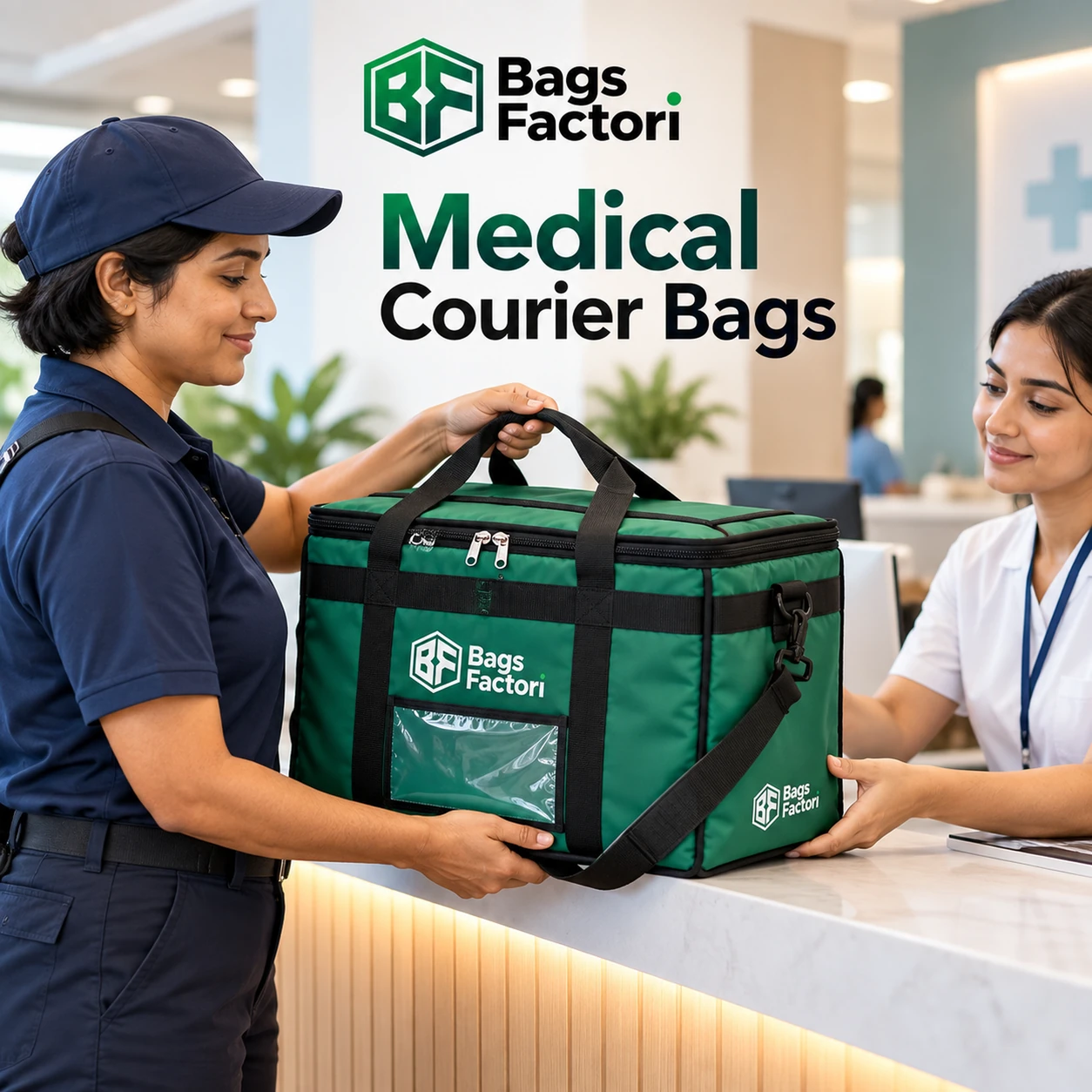
| Identification | Document sleeve and custom ID panel | Clearer collection handoff |
| Structure | Reinforced handles and optional PP board | Better load support |
Wholesale Medical Bags: Pricing Tiers & OEM/ODM Options
Pricing should be requested against one written bill of materials, not a generic description of a medical bag. Dimensions, insulation, liner, reinforcements, branding and export packing each affect unit cost. The tiers below organize buyer quotations; they are not guaranteed MOQs, published prices or fixed production promises. Request landed pricing for your destination.
B2B Wholesale & Quantity Pricing Structure
| Bulk tier | MOQ / pricing basis | Sample availability | Estimated production lead time |
| 50–200 units | Pilot MOQ subject to configuration | Prototype by quotation; samples usually 7–14 days | Confirm after approved sample |
| 201–500 units | Volume quote for one approved specification | Pre-production sample available | Date quoted after materials review |
| 500+ units | Fleet or distributor agreement by RFQ | Retained master sample | Phased plan in purchase order |
Request custom logo printing by silk screen, rubber patch or embroidery, with placement suited to cleaning. Custom color matching can distinguish routes or service categories; reflective safety strips help identify riders in low light. Add custom sizing, document sleeves, logger pockets and removable dividers.
Provide payload dimensions, maximum weight, cleaning method, required temperature conditions, artwork and projected replenishment volume. Clarify whether coolant, loggers, testing and freight are included. Operations and quality teams should approve the sample. See OEM/ODM manufacturing and request a quote for procurement details.
Medical Courier Bag Variants & Functional Features
Pharmacy and Medicine Delivery Bags
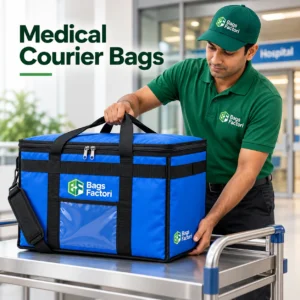
A medicine delivery bag for packaged prescriptions can use a wipe-clean lining, receipt pocket and divider for separate orders. Branch branding need not reveal patient details. See pharmacy delivery bags for this use case.
Lab Sample and Medical Transport Bags
Medical courier sample bags can be sized for the laboratory’s secondary packaging, with document storage kept separate. Select primary and secondary containment according to specimen classification and applicable shipping rules. The reusable carrier does not replace those packaging layers. (Custom Medical Courier Bags) Explore lab sample transport bags.
Cooler and Rider Configurations
A medical courier cooler bag can include insulation, coolant pockets and a position for a temperature monitor where the qualified process needs them. Padded ergonomic shoulder straps assist walking routes; motorcycle mounting hooks require approval against the actual vehicle, attachment method and permitted load.
Internal Partitions and Tracking Access
Removable dividers can group collection points without mixing correctly packed payloads. External sleeves keep documents and monitors accessible. Define the layout in the sample.
Enterprise Benefits for Healthcare Procurement Teams
A custom carrier can support a controlled, repeatable workflow. When reviewing medical courier transport bags, buyers can assess six commercial advantages:
- Procurement ROI: Agreed materials and a retained reference sample simplify repeat orders and make replacement costs easier to compare across facilities.
- Operational efficiency: Clear document sleeves and internal zones reduce searching during collections and receiving checks.
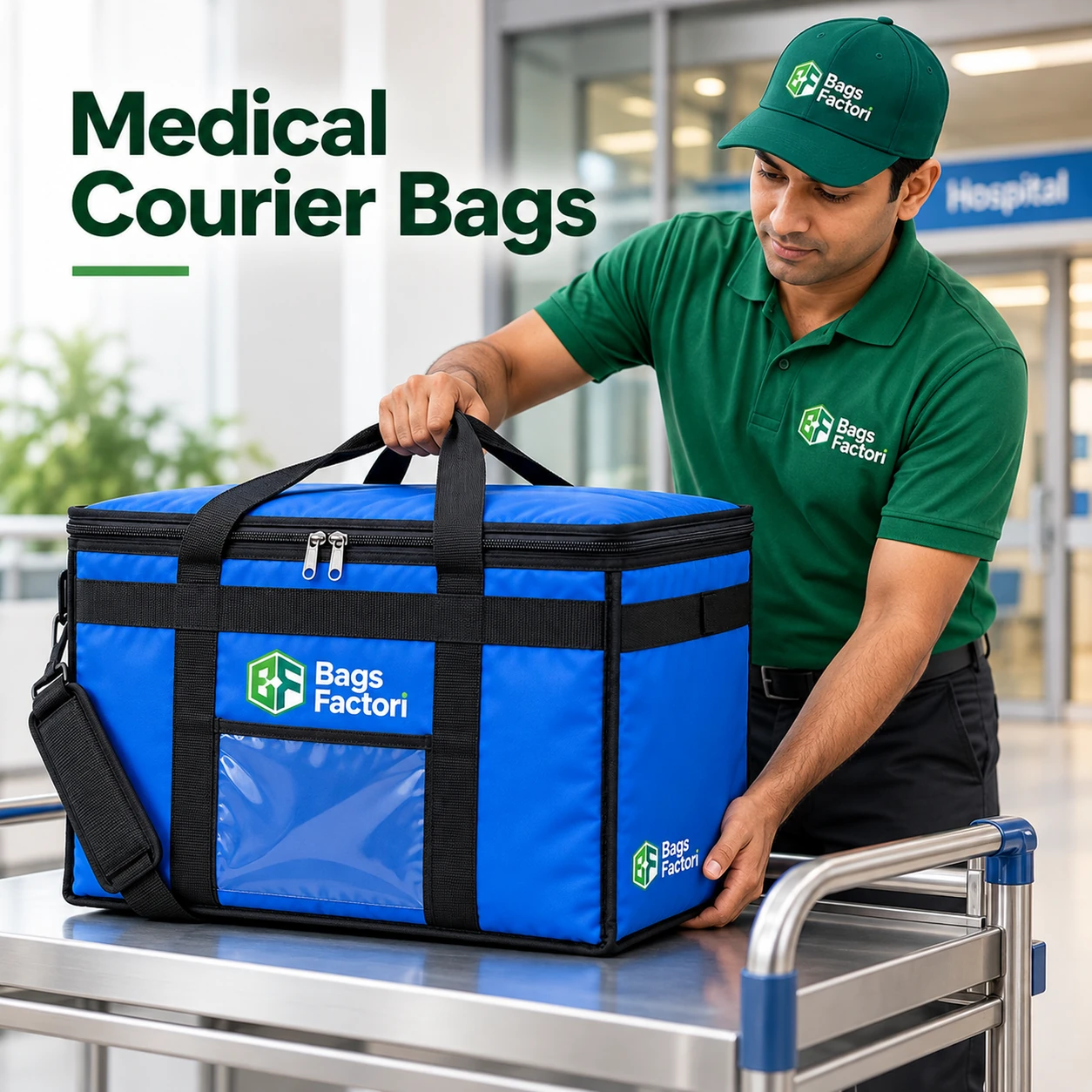
- Professional branding: Custom logos and route colors identify the healthcare operator without exposing patient information.
- Product protection: Structured bases and dividers help stabilize correctly packaged items through routine transfers.
- Weather resistance: Coated shells and covered closures limit routine splash exposure when specified for local conditions.
- Quality oversight: A common layout supports packout training and consistent logger placement where monitoring is required.
Trial the approved sample with representative packaged loads and the expected cleaning procedure. For controlled-temperature routes, evaluate the whole packout with conditioned coolant and monitoring under realistic seasonal conditions.
Pros & Cons: Custom OEM Medical Bags Versus Generic Carriers
Advantages: Bags Factori can size compartments around the packaging actually used by a hospital, laboratory or pharmacy. Buyers can document color, dimensions, liner, zipper and handling points for repeat fleet orders. Stock layouts may waste space or obscure documents. Assess liner compatibility and partition positions before adopting any generic carrier across multiple facilities.
Trade-offs: Custom development takes time for artwork, sampling and quality review. Added foam, partitions and structure raise cost and packed volume; small runs with several variants may have different MOQs. Neither a custom nor a stock fabric carrier proves pharmaceutical compliance or a temperature hold time by itself. Buyers still need proper packaging, procedures and qualification. Compare total landed cost against actual operating requirements.
Global Healthcare Logistics & Regional Requirements
In Dubai and Saudi Arabia, elevated ambient heat makes insulated packout qualification and exposure during loading especially important. UK and European buyers in Germany, France, Italy, the Netherlands and Spain can specify rain-resistant construction and cleaning compatibility. USA and Australian networks may require consistent export-carton identification for multi-depot procurement. Test South African and Mexican routes locally.
Applicable medicine-distribution, specimen-shipping and labeling rules differ by product and destination. Specify the required standards in the RFQ and obtain evidence for any claimed performance; an ordinary insulated bag carries no automatic pharmaceutical, diagnostic or vaccine approval. WHO guidance addresses qualified transport for time- and temperature-sensitive medicines. Align Incoterms, packed dimensions and documents with Bags Factori’s export and shipping guidance.
Medical Courier Bags: B2B Frequently Asked Questions
1. What is the MOQ for a custom medical courier order?
MOQ depends on fabric, insulation, branding and component sourcing. The 50–200-unit tier is a quotation scenario, not an automatic minimum. Obtain a project-specific written offer.
2. Can you add OEM/ODM branding and logo placement?
Yes. Supply artwork, brand colors and preferred placement for printing, patches or embroidery. Approve the labeled sample before production.
3. What provides insulation and waterproofing?
EPE foam and foil lining slow temperature exchange; PVC-coated fabrics resist splashes. Request tested finished-bag seams and closures before making a waterproof claim.
4. Is a pre-production sample available?
Yes, subject to the quoted terms. Inspect size, cleaning access, stitching and closure; separately test any required thermal packout with the actual payload.
5. What are delivery timelines to the USA, UK, UAE and Europe?
Sample approval, order size, freight mode and customs affect arrival. Request dated production and transit estimates for each destination.
6. How do bags handle extreme weather?
Choose the shell for rain and handling conditions. For temperature-sensitive medicines, qualify coolant and monitoring against seasonal route extremes; insulation alone is insufficient.
7. Are the bags washable and easy to sanitize?
Wipe-clean liners are available. Confirm disinfectant compatibility with the selected materials, follow your cleaning procedure and dry the carrier before reuse.
8. What payment terms and trade assurances apply?
Agree deposit, balance, inspection rights and any third-party assurance in the written contract. Ask for a pro forma invoice before remittance.
9. How are bags packaged for export freight?
Agree folding method, protective packing, carton count and labels. Confirm dimensions and gross weight before choosing air or sea freight.
10. Can dimensions and internal dividers be customized?
Yes. Provide the size of medicine cartons or secondary containers, coolant dimensions and document needs. Approve the proposed layout on a physical prototype.

Reviews
There are no reviews yet.