
Description
Frozen Food Insulated Delivery Bag Specifications & Material Quality
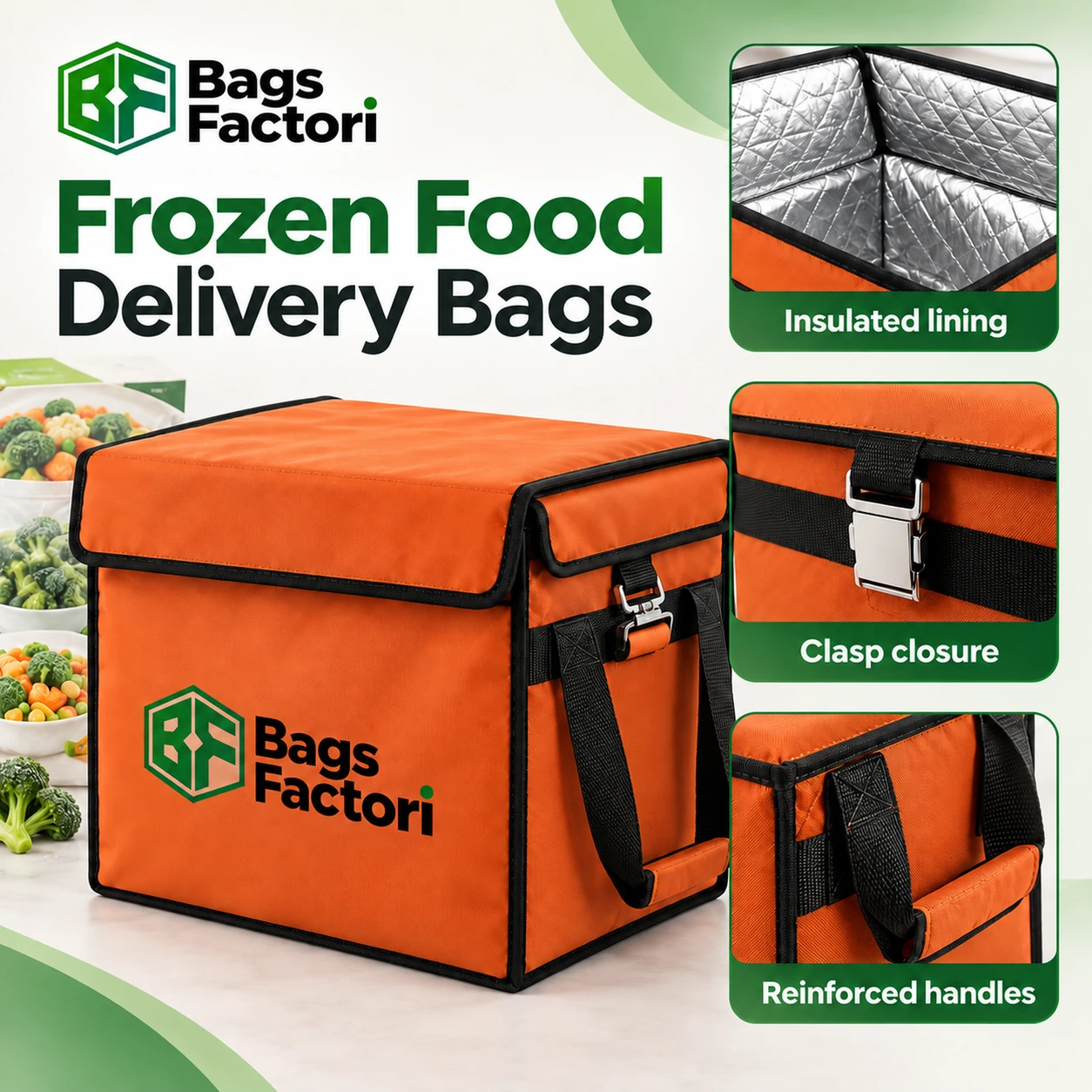
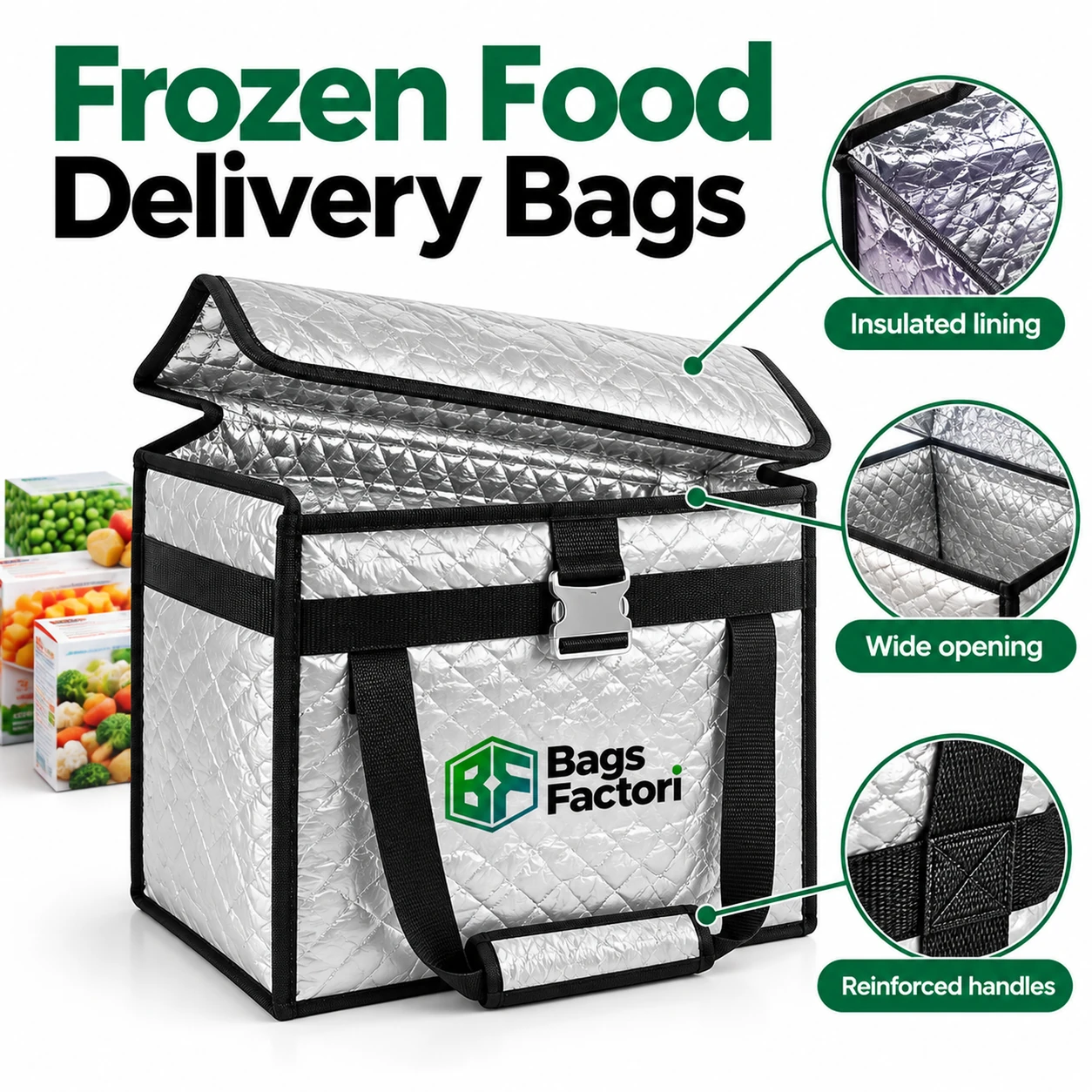
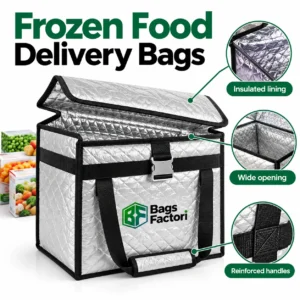
The shell must tolerate repeat loading while protecting the insulated structure. 600D Oxford nylon or polyester with PVC backing is one possible build; heavier Oxford or PVC tarpaulin can be specified for wet or abrasive conditions. Inside, high-density closed-cell EPE foam slows heat flow. A reflective thermal aluminum foil lining can supplement the insulation assembly, while a wipe-clean inner surface helps operators manage condensation and packaging spills.
Seam reinforcement, webbing handles and an optional PP-board base support dense frozen goods. A zipper and insulated flap limit air exchange. Specify heavy-duty YKK zippers in the bill of materials if required. Waterproof coating improves shell resistance to splashes, but waterproof claims require the completed seams and closure to meet an agreed test.
The best foam thickness is not selected in isolation. Oversized cavities and poor coolant placement weaken performance. Test actual products and the longest route. See the materials and quality guide for component options.
Product Specifications & Technical Details
| Feature / Specification | Technical Standard | B2B Advantage |
| Exterior | 600D Oxford/PVC backing; tarpaulin option | Durable, weather-resistant shell |
| Insulation core | Closed-cell EPE foam; thickness specified in RFQ | Reduced heat gain |
| Thermal layer | Reflective aluminum foil with cleanable inner liner | Easier maintenance |
| Closure | Insulated flap and heavy zipper; YKK by request | Better closure consistency |
| Support | Reinforced seams, webbing and optional PP board | Stability under dense loads |
| Packout layout | Coolant sleeves and removable partitions | Repeatable packing arrangement |
 Bulk Ordering, Price Tiers & OEM/ODM Frozen Bag Customization
For export buying, the useful comparison is the landed cost of the approved configuration. Size, foam thickness, outer fabric, dividers, artwork and packing format affect the unit quote. The bands below are RFQ scenarios, not published unit prices, guaranteed MOQs or firm production promises. Compare quotes against one drawing.
B2B Wholesale & Quantity Pricing Structure
| Bulk tier | MOQ / pricing basis | Sample availability | Estimated production lead time |
| 50–200 units | Pilot order subject to project MOQ | Prototype on request; samples usually 7–14 days | Confirm after sample approval |
| 201–500 units | Volume price for one approved construction | Pre-production sample on request | Quote after material selection |
| 500+ units | Contract price for repeated fleet supply | Approved master sample | Agree phased schedule in purchase order |
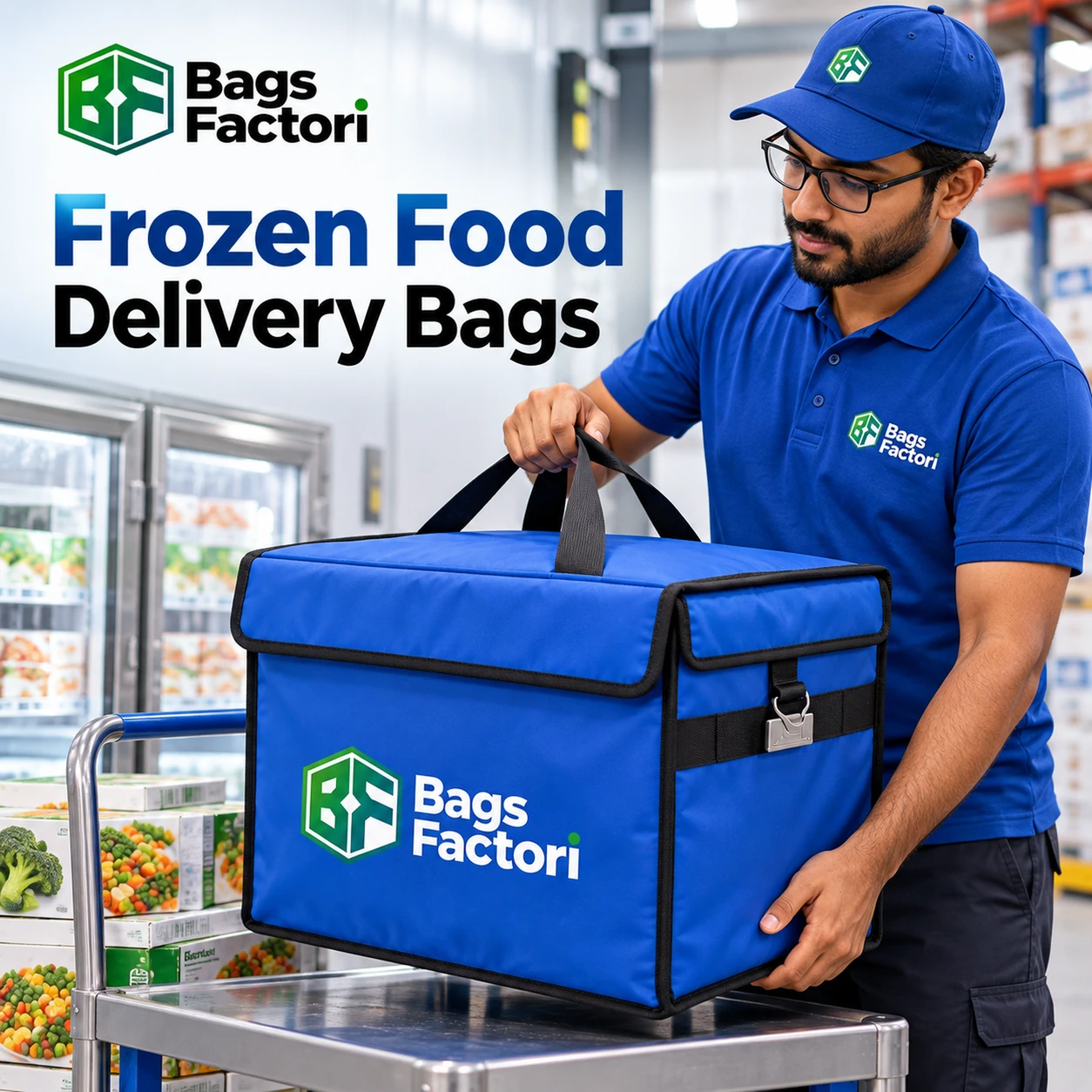
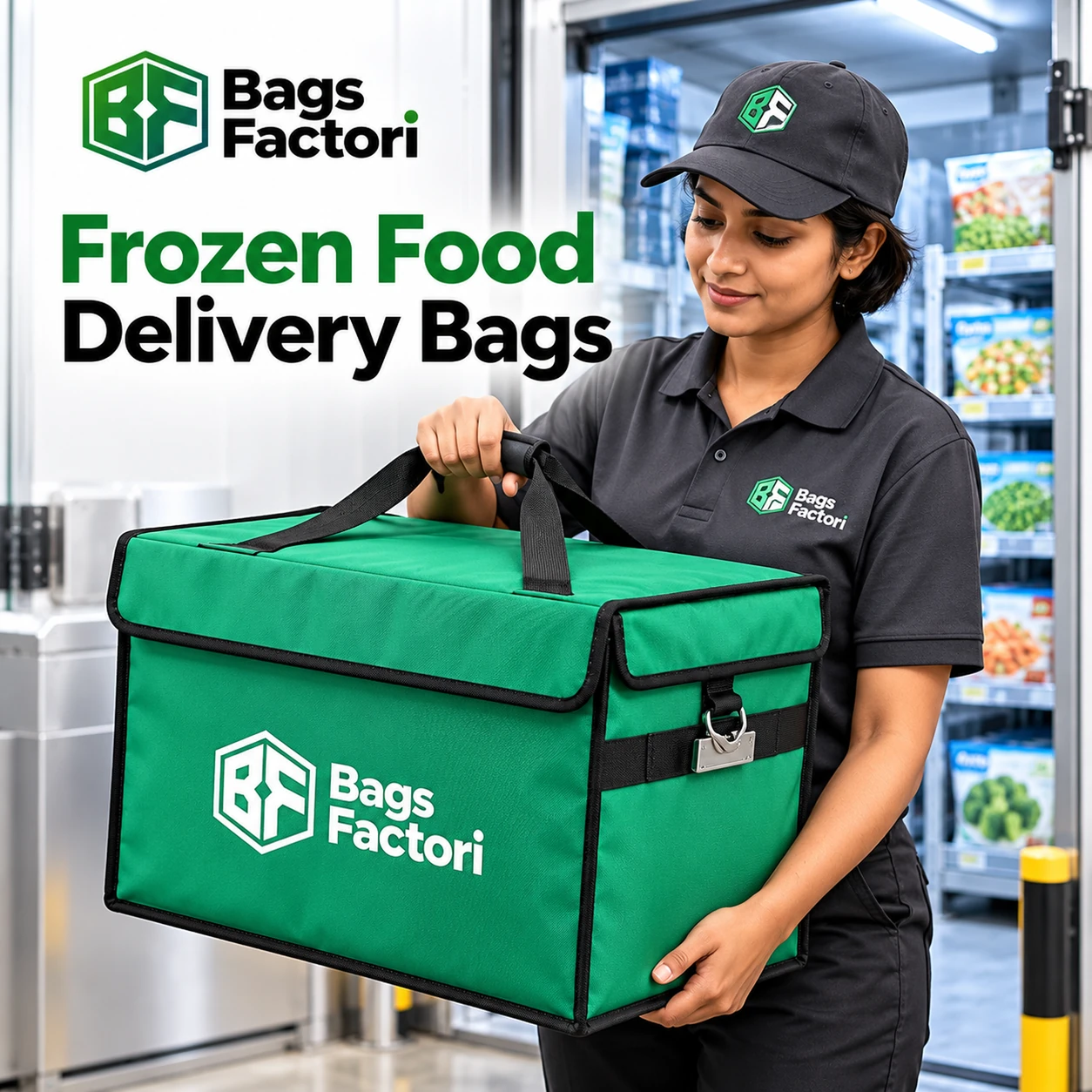
Private-label choices include custom logo printing by silk screen, rubber patch or embroidery, based on shell and cleaning requirements. Specify custom color matching to separate frozen orders from chilled deliveries, reflective safety strips for rider models and custom sizing for grocery totes, dessert boxes or seafood packs. Label windows can identify stores, routes or customer programs.
Send drawings, the largest and smallest payload, maximum packed weight, coolant footprint, logo artwork and projected annual quantity. Test the sample for handling and thermal performance. Get details on OEM/ODM manufacturing or submit a bulk quotation request. Quote refrigerants, loggers and testing separately.
Frozen Food Bag Variants, Insulation & Rider Features
Frozen Grocery Order Bags
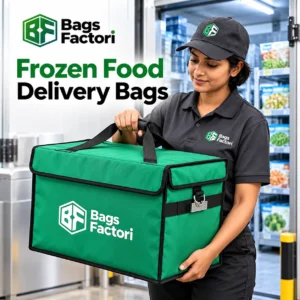
A frozen food delivery bag for supermarkets should fit the most common order sizes without forcing ambient products into the same compartment. Wide openings and partitions support picking and order separation. Link frozen dispatch with chilled products delivery bags when your operation handles both categories.
Heavy-Load Seafood and Meat Carriers
Dense frozen cartons require reinforced bases and carrying points. Keep filled weight manageable. Specify the expected load and test handles before approving production.
Insulated Bags for Frozen Food Delivery on Bikes
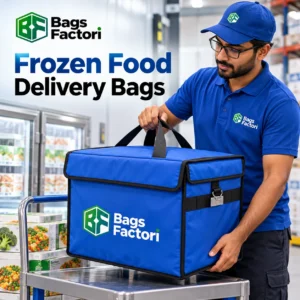
For frozen food delivery bags for bike or motorcycle fleets, request padded ergonomic shoulder straps, reflective details and dimensions that clear the rider and vehicle. Motorcycle mounting hooks should be designed against the actual rack, attachment method and permitted load. For desserts, see ice cream delivery bags.
Insulation Levels and Coolant Dividers
Removable dividers and dedicated gel-pack pockets make a specified packout easier to repeat. Thermal insulation levels should be chosen by route testing with the real payload and seasonal conditions, not by foam thickness alone.
B2B Benefits of Custom Frozen Food Delivery Bags
Buyers of insulated bags for frozen food delivery can evaluate a sample against operating results before committing to fleet quantities. Six practical benefits of a well-specified design are:
- Better investment control: Reusable construction supports planned replenishment; compare cost per completed route against disposable packaging and bag replacement rates.
- More consistent dispatch: Defined pack positions and color-coded exteriors help teams identify frozen orders without relying on memory alone.
- Brand presence at delivery: Printed logos, patches and fleet colors make the carrier recognizable at hotels, supermarkets and customer doors.
- Protection for packaged food: Reinforced bases and partitions reduce movement and pressure on appropriately packed frozen products.
- Improved weather resistance: Coated outer shells and covered openings limit splash exposure when made and tested for the route.
- Clearer thermal decisions: A common design helps compare logged results.
Use the same food packaging, refrigerants and loading instructions during evaluation that your team will use after deployment. This makes a promising sample more useful than an unverified temperature claim.
Pros & Cons: OEM Bags Factori Versus Generic Frozen Carriers
Advantages: A custom bag can match a grocery tote or dessert carton closely, reduce unnecessary internal space and position coolant away from vulnerable packs. Buyers can align logo placement, color coding and carrying method with the rest of their fleet. Approved samples guide bulk inspection. Stock bags may fit payloads poorly. For bulk buyers, compare landed cost per route and replacement frequency, not only unit price. Excess empty space in a stock size may complicate packing, while a correctly sized custom bag can make the approved coolant layout easier to reproduce.
Trade-offs: Custom dimensions and materials require sampling time, artwork approval and a confirmed production schedule. Thicker insulation increases packed volume and may make rider models heavier. A costly shell cannot correct poor pack conditioning. Test coolant, openings and seasonal exposure.
Global Suitability & Regional Frozen-Delivery Requirements
Dubai and Saudi Arabia routes expose bags to intense heat, making shade, dispatch speed, tested insulation and refrigerant capacity especially important. UK, German, French, Italian, Dutch and Spanish buyers may prioritize rain-resistant shells and cleaning procedures. USA and Australian programs often need clear export-carton markings and consistent replenishment across depots. Test routes in South Africa and Mexico locally.
Food-safety obligations and any food-contact or labeling requirements depend on product, destination and use. Specify applicable standards and ask for supporting material and performance evidence; do not assume an insulated bag has regulatory approval or a guaranteed frozen hold time. Agree carton format, Incoterms and freight documents using Bags Factori’s export and shipping guidance.
Frozen Food Insulated Delivery Bag: B2B FAQs
1. What is the MOQ for custom bulk orders?
It depends on size, fabric and branding. The 50–200-unit range is a pilot quotation scenario, not a confirmed minimum. Request an MOQ for your approved specification.
2. Can we add OEM/ODM branding and custom logo placement?
Yes. Supply vector artwork and placement requirements for silk screen, patches or embroidery. Approve colors and workmanship on a physical sample.
3. Which materials provide insulation and waterproofing?
Closed-cell EPE foam and reflective lining slow heat transfer; PVC-backed Oxford or tarpaulin resists splashes. Specify completed-bag seam and closure tests for waterproof claims.
4. Can we request a pre-production sample?
Yes. Test its dimensions, load handling and packed thermal performance with the intended coolant before releasing the bulk order.
5. When can you ship to the USA, UK, UAE or Europe?
The date depends on sample approval, quantity, freight mode and customs. Ask for a written production schedule and destination-specific shipping quotation.
6. How do these bags perform in extreme weather?
Insulation slows warming but cannot guarantee frozen conditions in hot weather. Validate the full packout on your longest seasonal route.
7. Are the bags washable and easy to sanitize?
Request a wipe-clean liner and compatible cleaning instructions. Empty and fully dry the bag; inspect seams and closures after cleaning.
8. What payment terms and trade assurances are offered?
Confirm deposits, inspection rights, final balance and any third-party assurance in the quotation or signed purchase agreement before payment.
9. How are bulk orders packed for international freight?
Specify folding, inner protection, carton quantities, labels and pallets in the purchase order. Confirm packed weights and dimensions for freight costing.
10. Can you make custom dimensions and internal dividers?
Yes. Provide product pack sizes, expected load and coolant dimensions. Approve removable partitions and pocket positions on the sample.

Reviews
There are no reviews yet.